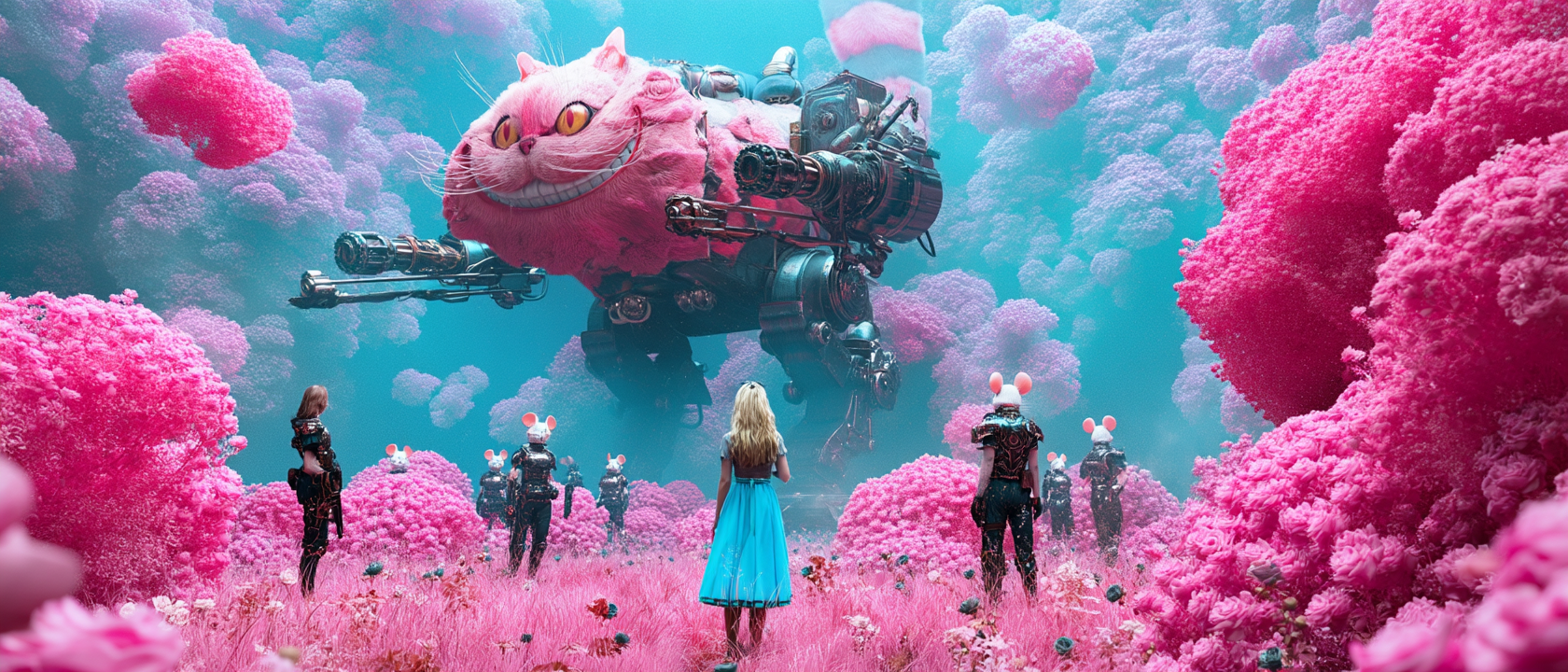
So you’ve stumbled onto one of the few medical conditions that sounds whimsical and magical but is actually your brain briefly deciding reality is optional. Let’s unpack the circus.
🧠 What is Alice in Wonderland Syndrome?
It’s a neurological disorder where your perception goes off the rails. Objects may look too big (macropsia), too small (micropsia), too far away, too close, or hilariously warped like reality is melting out of spite.
People can also feel like:
-
Their body parts are changing size (great for existential dread)
-
Time is speeding up or slowing down
-
Sounds are distorted
No, you’re not in a fantasy novel. Your brain just temporarily forgot how to measure things.
📜 History (because everything weird has a Victorian origin story)
The name comes from Alice’s Adventures in Wonderland by Lewis Carroll, who very likely experienced migraines himself and baked his symptoms into literature like a Victorian coping mechanism.
The syndrome was formally described in 1955 by British psychiatrist John Todd. He basically looked at these bizarre symptoms and said, “Yes, this is a thing, and no, you’re not imagining it… well, you are, but medically.”
🔍 How it’s diagnosed
Brace yourself: there’s no neat little lab test where a doctor presses a button labeled “Reality Check.”
Diagnosis is mostly:
-
Patient describing symptoms (which already sounds insane)
-
Neurological exam
-
Ruling out other causes (tumors, epilepsy, drugs, etc.)
-
Brain imaging (MRI/CT) sometimes used
-
Often linked to migraines, infections, or epilepsy
So yeah, a lot of it boils down to:
“Tell me how reality betrayed you this week.”
⚠️ Is it dangerous?
Short answer: usually no.
Long answer:
-
The syndrome itself is not physically harmful
-
The situations it creates can be (imagine driving while your car suddenly looks toy-sized or the road stretches like taffy… don’t do that)
It’s often associated with:
-
Migraines
-
Viral infections (especially in children)
-
Epilepsy (in some cases)
So the danger isn’t the syndrome itself. It’s the underlying cause or your poor life choices during an episode.
☠️ Is it fatal?
No.
Despite sounding like the prelude to being swallowed by a surreal void, AIWS does not kill you.
If something fatal is happening, it’s not the syndrome, it’s whatever serious condition might be causing it. Subtle but important distinction your brain would appreciate.
💊 Can it be cured?
“Cured” is doing a lot of heavy lifting here.
-
No specific cure for the syndrome itself
-
Treatment focuses on the underlying cause
-
Migraines → managed with meds
-
Infections → treated normally
-
Epilepsy → controlled with medication
-
Good news:
-
Many cases (especially in kids) resolve on their own
Bad news:
-
Your brain might occasionally decide to reboot reality again just to keep things interesting
🌍 How many cases worldwide?
Here’s where science shrugs dramatically.
-
It’s considered rare, but also underdiagnosed
-
Many people experience mild episodes and never report them
-
Some estimates suggest thousands to tens of thousands globally, but nobody has a neat spreadsheet because humans are terrible at reporting “hey, my hands turned into balloons for 10 minutes”
In children with migraines or viral infections, it’s more common than you’d think
🧾 Final reality check
Alice in Wonderland Syndrome is:
-
Weird ✔️
-
Disturbing ✔️
-
Occasionally fascinating ✔️
-
Usually not dangerous or fatal ✔️
It’s basically your brain glitching like a badly coded simulation, then pretending nothing happened afterward.
Comforting, right? 🫠
Hits : 108