Definition
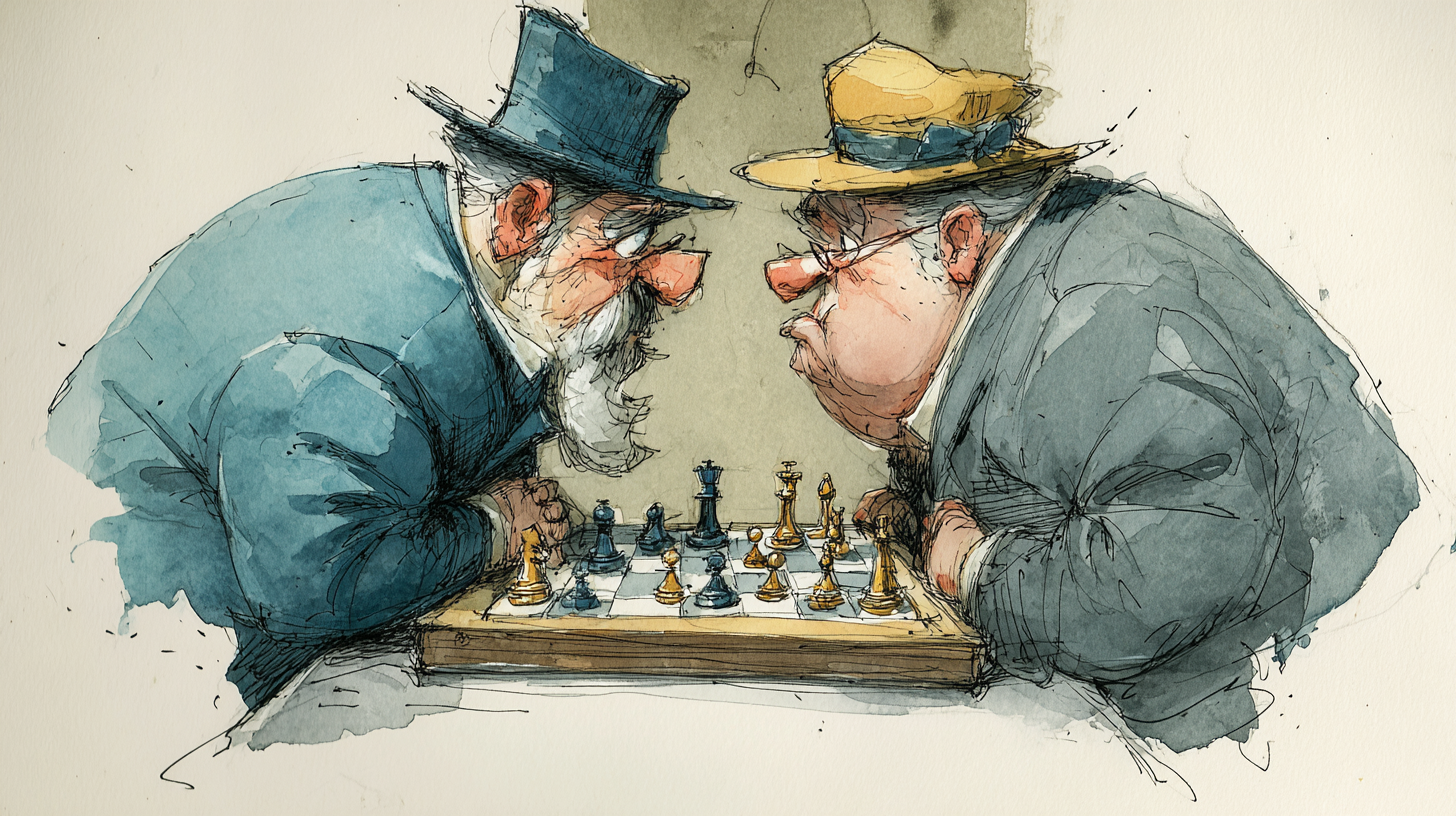
Zugzwang (noun) is a term from chess describing a position where a player is compelled to move, but any move they make will weaken their position. In other words, the best option would be to do nothing… except the rules don’t allow that.
So you move.
And you lose.
Elegantly.
In broader usage, it refers to any situation where being forced to act leads to a worse outcome than inaction. A kind of strategic quicksand, but with better vocabulary.
History
Zugzwang comes from the deeply serious world of chess, where people stare at wooden pieces and quietly ruin each other’s lives.
The concept itself has existed for centuries, but the term gained prominence in the 19th century, particularly through German chess literature. German players, apparently unwilling to settle for something simple like “you’re doomed,” coined a word that sounds like a mechanical failure.
Early documented use appears in German chess writing around the mid-1800s. From there, it spread into international chess vocabulary, because once you invent a word this precise and this cruel, the rest of the world adopts it immediately.
By the early 20th century, English-speaking chess players were using “zugzwang” without translation, which tells you everything you need to know about how useful and uncomfortably relatable the concept is.
Usage
In chess:
- “White is in zugzwang” means white must move, and every legal move worsens their position.
In real life:
- “He was in political zugzwang”
- “She faced financial zugzwang”
- “This conversation is pure zugzwang”
It’s used whenever someone is trapped in a situation where:
- They must act
- Every action is bad
- Doing nothing would be better… but isn’t allowed
So basically, adulthood.
Etymology
The word is German, because of course it is.
- Zug = “move” (as in a move in chess, but also “pull” or “draft” in other contexts)
- Zwang = “compulsion,” “constraint,” or “force”
Put them together and you get:
“Move-compulsion”
or more poetically:
“You have to move, and you’re going to regret it.”
German, as usual, looked at a complex emotional and strategic experience and said, “We can compress that into one slightly intimidating word.”
The term reflects a very literal idea:
- You are forced (Zwang)
- To make a move (Zug)
And that move is your downfall. Efficient. Brutal. Linguistically satisfying.
Final reality check
Zugzwang is not just a chess concept. It’s a quiet, uncomfortable truth about decision-making.
People like to imagine:
- There’s always a good move
- There’s always a solution
- Action is better than inaction
Zugzwang politely disagrees.
Sometimes:
- Waiting is better… but impossible
- Acting is required… but harmful
- Every option is a downgrade
And the only thing left is choosing how badly you want to lose.
Which is probably why humans love the word so much. It gives a sophisticated label to a deeply familiar feeling:
Being stuck, being forced, and realizing too late that the game was already decided.
Chess just had the decency to admit it first.
Hits : 96