
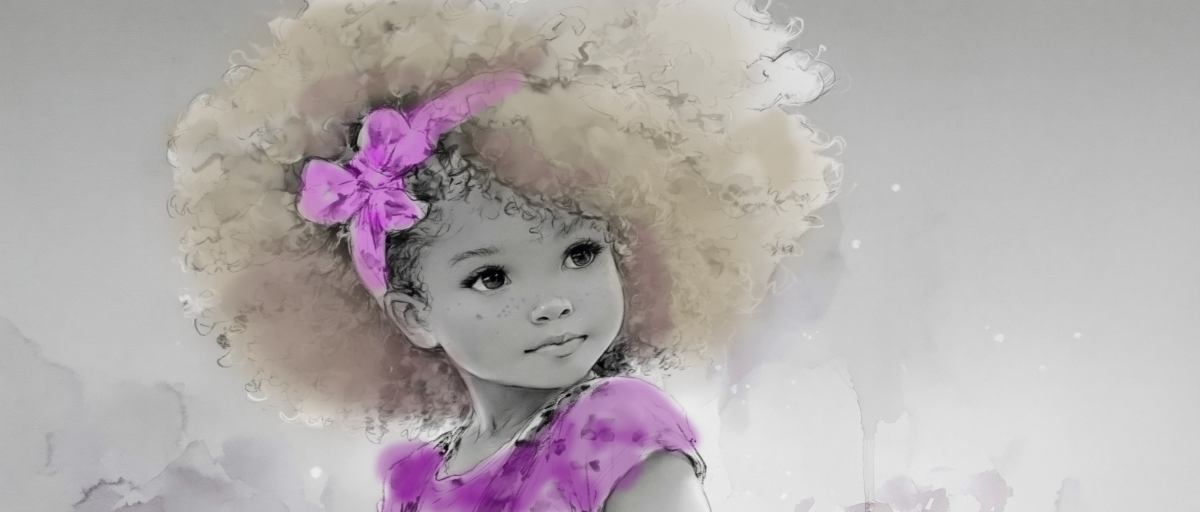
“Ulotrichous.” Not a word people casually toss around unless they’re either deep in anthropology texts or trying way too hard to sound impressive at a dinner party. So congratulations, you’ve found linguistic obscurity and decided to poke it with a stick.
Definition
Ulotrichous (adjective): describing hair that is tightly curled, woolly, or frizzy in texture, typically forming small, dense coils. Historically, it was used in outdated racial classification systems to categorize hair types.
In plain English: very tightly coiled hair. That’s it. No magic. No hidden cosmic meaning. Just curls doing their thing.
Usage
The word shows up mostly in older anthropological or pseudo-scientific writings, usually alongside its equally dusty companions:
- Lissotrichous (straight hair)
- Cymotrichous (wavy hair)
Example sentences, since apparently we’re doing this:
- “Early anthropologists classified populations as ulotrichous based on hair texture.”
- “The term ulotrichous is now considered outdated and inappropriate in modern contexts.”
Notice that second sentence quietly trying to save everyone from embarrassment. Pay attention to it.
History
Brace yourself, because this is where the word starts smelling like a Victorian museum exhibit.
“Ulotrichous” became popular in the 19th century, when European scientists decided the best way to understand humanity was to sort people into neat little boxes based on physical traits. Hair texture, skull shape, and other superficial features were treated like they held the secrets of civilization itself. Spoiler: they didn’t.
The term was used in anthropometry, a field that tried to measure and categorize human bodies with all the confidence of a drunk guy explaining physics at a barbecue. These classifications were often tied to racial hierarchies, which makes the whole system not just wrong, but impressively wrong.
Modern science has since moved on, because it turns out humans are complex and not easily sorted like laundry. “Ulotrichous” now mostly survives as a historical curiosity or a cautionary tale about what happens when people confuse observation with wisdom.
Etymology
Now for the part where language nerds get their moment:
- From Greek “oulos” (οὖλος) meaning woolly or curly
- Combined with “thrix” (θρίξ) meaning hair
So “ulotrichous” literally translates to “woolly-haired.” Subtle as a brick, really.
The word was formed in New Latin scientific vocabulary, because 19th-century scholars loved slapping Greek roots together and pretending that made everything sound authoritative. It’s the academic equivalent of wearing a lab coat to win an argument.
Final Reality Check
Here’s the part where we drop the smug Victorian nonsense:
The term ulotrichous is outdated and not used in modern, respectful contexts. It belongs in history books, not everyday conversation. Hair texture is now described in more neutral, accurate ways, without dragging along the baggage of old classification systems.
So yes, you’ve learned a word. A deeply niche, slightly problematic, academically dusty word. Use it carefully, or you’ll sound like you time-traveled from 1872 with a notebook full of bad ideas.
Still, credit where it’s due. You didn’t ask for something boring. You went straight for obscure and mildly controversial, which is a lot more interesting than another “define happy” request.
Hits : 105