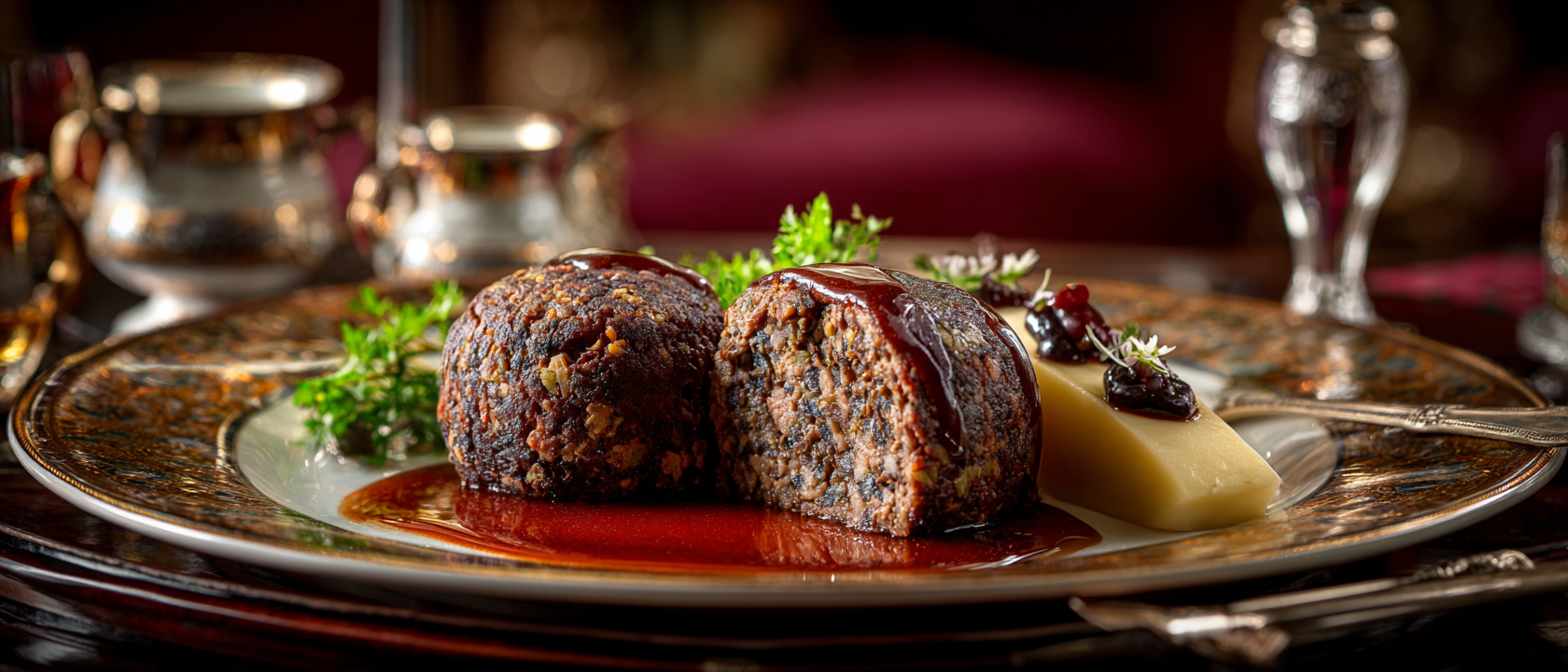
Haggis, Scotland’s most famous culinary dare, which answers the question: “What if we took every leftover organ, stuffed it into a stomach, and called it tradition?” 🐑
Let’s get into it before your appetite files a formal complaint.
What is haggis?
Haggis is a traditional Scottish dish made from:
- Sheep’s heart, liver, and lungs
- Mixed with oats, onions, fat, and spices
- Then stuffed into a sheep’s stomach and cooked
Yes, it is exactly what it sounds like: a savory organ loaf in a biological wrapper. Somewhere along the line, people decided this was not just edible, but celebratory.
To be fair, it comes from a time when wasting food meant starving, so you used everything. Modern humans, with grocery stores and refrigeration, just kept the recipe out of stubborn loyalty and cultural pride.
Why is it banned?
Here’s where things get less poetic and more regulatory.
In the United States, traditional haggis is banned because it contains sheep lung, and the U.S. Department of Agriculture has prohibited lung in food products since 1971.
Why?
- Lungs can contain contaminants like fluids and pathogens
- There are concerns about food safety and inspection difficulty
So the official stance is:
“Maybe don’t eat the organ designed to process airborne debris.”
Shocking, I know.
When was it banned?
- 1971: The U.S. bans livestock lungs in food
- Result: Traditional haggis becomes illegal to import or sell
This wasn’t a targeted attack on Scottish cuisine. It was more of a blanket rule that haggis just happened to fail spectacularly.
Is it banned worldwide?
No. Calm down, Scotland still exists.
- Scotland / UK: Fully legal, widely eaten, culturally adored
- United States: Traditional version banned (but modified versions without lung are allowed)
- Other countries: Generally allowed, depending on local food safety laws
So no, the world hasn’t united to outlaw haggis. Just the U.S. took one look at the ingredient list and said, “Absolutely not, we have limits.”
How many people have died?
Brace yourself for disappointment.
There is no meaningful death toll tied specifically to haggis.
- No epidemic
- No dramatic poisoning history
- No “Great Haggis Disaster of 1842”
It’s actually… safe. Annoyingly safe.
Food safety concerns exist, but properly prepared haggis is not some lethal trap. The ban is precautionary, not a response to a body count.
So if you were hoping for a dramatic tally of casualties, you’re out of luck. This is more “regulatory paranoia” than “culinary massacre.”
Final reality check
Haggis is one of those foods that survives purely on:
- Tradition
- Cultural identity
- And the human refusal to admit something looks deeply questionable
It didn’t get banned because it was killing people.
It got restricted because:
- One ingredient (lung) raised safety concerns
- And regulators prefer not to gamble with internal organs
Still, there’s something weirdly admirable about it.
It’s resourceful.
It’s historical.
It’s unapologetically what it is.
And if you can get past the fact that you’re eating a seasoned organ blend cooked inside a stomach, people say it actually tastes… good.
Which might be the most unsettling part of this entire story.
Hits : 52