
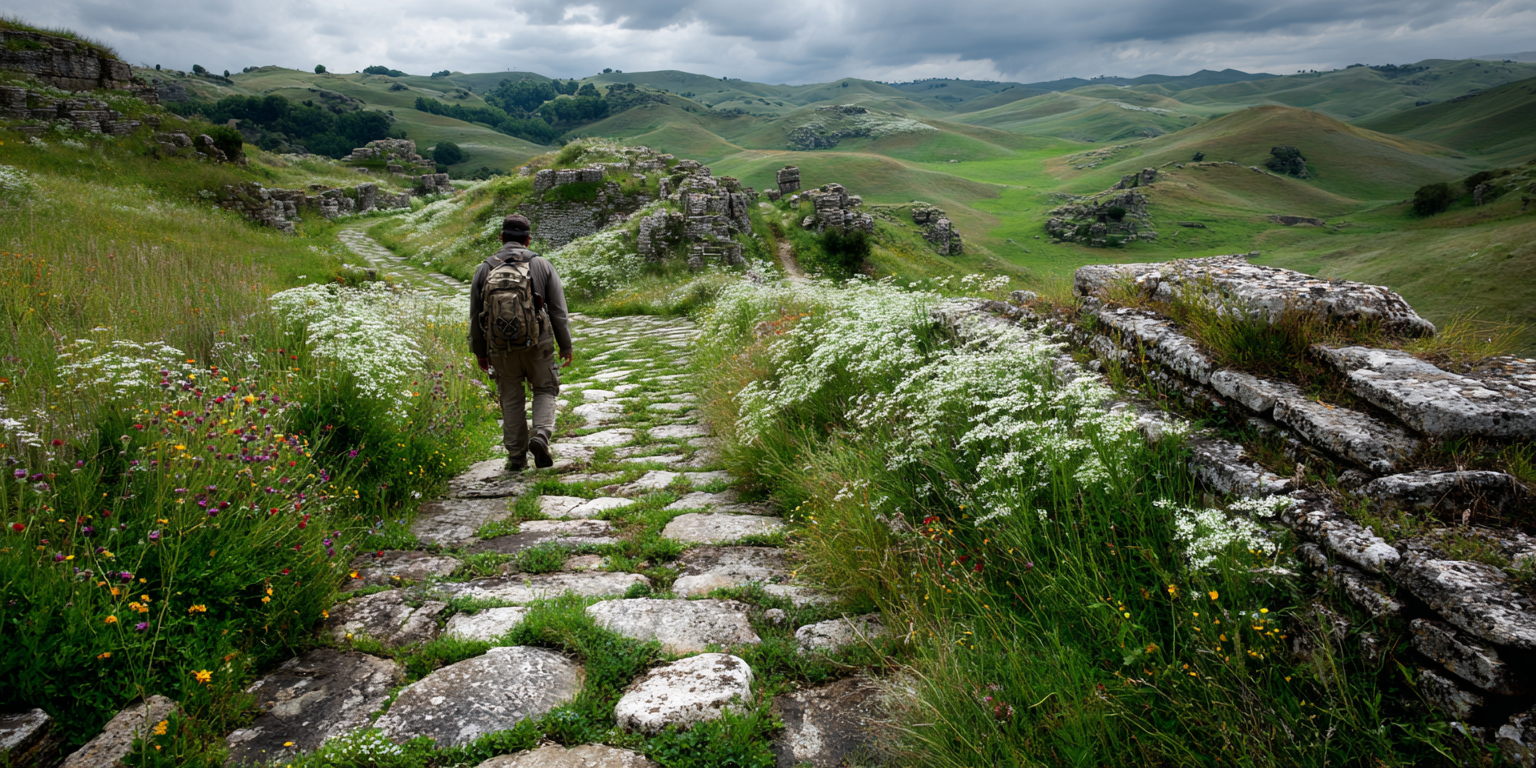
“Peregrinate,” a word so unnecessarily fancy it practically travels first class while the rest of English rides coach. Let’s unpack it.
Definition:
Peregrinate (verb) means to travel from place to place, especially over long distances or with a sense of wandering. It’s what you say when “go for a walk” feels too pedestrian for your delicate linguistic sensibilities. You’re not walking around—no, you’re peregrinating, as if you’re a 17th-century scholar avoiding real work.
Usage:
Used in sentences like:
- “He peregrinated across Europe in search of enlightenment.”
- Translation: He backpacked and probably complained about train schedules.
- “The poet peregrinated through the countryside.”
- Translation: The poet had too much time and not enough income.
It’s a word people use when they want to sound like they’ve read more books than they actually finished. Drop it in casual conversation and watch everyone slowly regret inviting you.
History:
This little linguistic peacock struts in from Latin, specifically peregrinari, meaning “to travel abroad” or “to wander.” It shows up in English around the late 16th century, right when writers decided that plain speech was for peasants and everything needed a classical makeover. Why say “travel” when you can inflate your sentence like a Victorian ego balloon?
The root Latin word peregrinus meant “foreigner” or “stranger,” which is fitting, because anyone using “peregrinate” in modern conversation immediately becomes one. It was originally used in contexts of pilgrimage or extended journeys, often with a spiritual or exploratory flavor. Over time, it drifted into general “wandering” territory, though the word itself never got the memo that subtlety exists.
Etymology (the part where we peel the onion and pretend it matters deeply):
- Latin peregrinus = “foreign, from abroad”
- Broken down further:
- per = “through”
- ager (or agr-) = “field, land”
So originally, the word evokes someone going “through the fields” or beyond their native land. Romantic, right? A lone traveler crossing open landscapes… which is ironic, because now it mostly gets used by people crossing from their couch to their bookshelf.
From peregrinus came peregrinari (to travel), which then morphed into English peregrinate. English, being the linguistic magpie it is, saw a shiny Latin word and immediately stole it, no questions asked.
Why it sounds ridiculous today:
Because English already has about 47 perfectly functional words for moving around: travel, roam, wander, trek, stroll, march, drift, meander… but no, someone had to keep peregrinate alive like it’s on life support in a thesaurus.
Using it now is like showing up to a backyard barbecue in a powdered wig. Technically allowed. Socially questionable.
Final reality check:
There’s nothing wrong with the word itself. It’s precise, historically rich, and kind of poetic if you’re writing something that actually deserves it. But in normal conversation, it lands with all the grace of someone loudly explaining wine notes at a gas station.
Still, buried under all that pretension is a genuinely nice idea: movement, curiosity, the human urge to leave one place and see another. Strip away the Latin ego and you’re left with something almost… human.
So yes, peregrinate means to wander. Congratulations. You’ve upgraded “walking around” into a word that requires emotional preparation to say out loud.
Hits : 33