
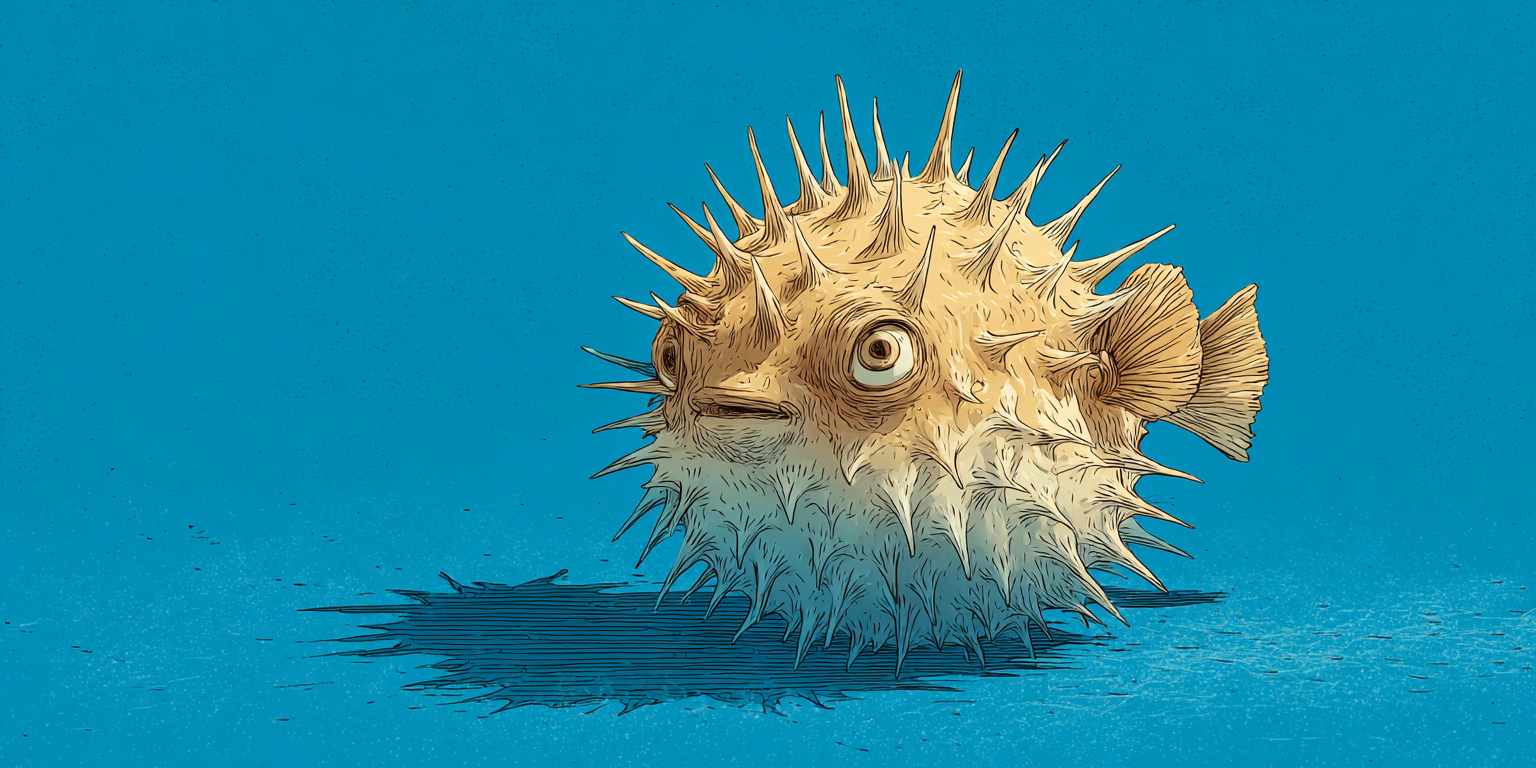
One of humanity’s finest culinary decisions: “Let’s eat the fish that can quietly suffocate us while we’re fully conscious.” Brilliant species, truly. 🐡
Let’s break this down without romanticizing the whole “death as seasoning” angle.
Why is fugu banned (or restricted)?
Fugu (pufferfish) contains tetrodotoxin, a neurotoxin so potent it makes cyanide look like a hobby chemical. It paralyzes your muscles while your brain stays fully awake, meaning you suffocate slowly, aware of every second. No antidote. Just vibes and regret.
The toxin is concentrated in organs like the liver, ovaries, and skin, and even tiny mistakes in preparation can kill you.
So governments looked at this and said, “Maybe not everyone should casually filet death-fish in their kitchen.”
When was it banned?
There isn’t one neat global “ban date,” because humans love inconsistency.
- In Japan, fugu has been banned and unbanned repeatedly for centuries
- The Tokugawa shogunate (1600s–1800s) banned it outright
- Modern Japan didn’t ban it completely but instead regulated it heavily, requiring licensed chefs
- Certain parts, like fugu liver, were banned in restaurants in 1984
So instead of banning the whole thing, Japan basically said:
“Fine, you can eat it… but only if someone with years of training handles the knife.”
Is the ban (or restriction) justified?
Short answer: yes. Painfully yes.
Historically, fugu was a mass-casualty hobby:
- At one point, ~100 deaths per year in Japan
- In 1958 alone: 176 deaths
Modern regulation dramatically reduced deaths because:
- Only licensed chefs can prepare it
- Toxic organs are strictly controlled
And guess what?
Most modern deaths happen when people ignore all that and try DIY sushi with a fish that actively wants revenge.
So yes, the restrictions are justified. This isn’t bureaucratic overreach. This is “please stop accidentally killing yourself over dinner.”
How many people have died in the last 50 years?
Let’s ruin the mystique with numbers.
Modern data (Japan, where most fugu is eaten):
- About 0–6 deaths per year recently
- Roughly 6 deaths per year average (2000–2020)
Do the math over ~50 years:
👉 Rough estimate: 200–400 deaths globally, mostly in Asia
Earlier decades were worse:
- 1970s–80s: ~20 deaths/year
So congratulations, humanity has improved from “frequent lethal mistake” to “occasional lethal hobby.”
Is fugu still banned?
Depends where you are and how much your government trusts you not to poison yourself.
Not banned (but heavily regulated):
- Japan
- South Korea
- China
In these places:
- Only certified chefs can prepare it
- Specific species and parts are allowed
- Restaurants follow strict laws
Effectively banned or tightly restricted:
- United States – allowed only through very controlled imports and licensed handling
- European Union – generally banned sale of toxic pufferfish species
- Thailand – banned after multiple deaths
Other regions:
- Some countries allow limited consumption
- Others ban it outright because, shockingly, “food that kills you” doesn’t test well with regulators
Final reality check
Fugu isn’t banned because governments hate fun. It’s restricted because:
- It’s objectively dangerous
- It has no antidote
- And historically, people kept dying like they were speedrunning Darwin Awards
Yet humans still line up to eat it because:
“It’s delicious and might kill me” apparently counts as a selling point.
There’s something weirdly admirable about that level of commitment to dinner.
Also deeply stupid. But mostly admirable.
Hits : 38